

How Dangerous is the Cupboard Spider?

In this article, we look at the Cupboard spider (Steatoda sp.), which closely resembles the deadly Redback and is a common guest in Australian houses.
We also cover spiders and their bites in our general and childcare first aid courses.
We have training locations in every state, capital city, and major town throughout Australia. Head to our website to find and enrol in a training location near you today.
Like most members of the family Theridiidae (comb-footed spiders), the Cupboard spider has the following identifying characteristics:
Unlike Redback spiders, Cupboard spiders do not have a red hourglass marking on their underside.
Cupboard spiders have been known to build their tangled looking webs under rocks, timber, and bark in temperate and tropical climates throughout the world.
Some male specimens can also be found walking among leaf litter as ant mimics, spiders that imitate other insects to prey upon them without being detected.
There are two cosmopolitan species of Cupboard spiders that are commonly found in dark, sheltered, and undisturbed places around the house or garden - Steatoda capensis and Steatoda grossa.
Also known as Brown house spiders, these two species prefer to build their webs:
Unlike their look-a-like, the Redback spider, Cupboard spiders are not considered especially dangerous.
They bite infrequently, and their bites may only result in headache, nausea, and small blisters around the affected area.
If you are responding to a bite from a Cupboard spider, reassure the casualty and apply a cold compress to the affected area.
Then, monitor for signs of deterioration or anaphylaxis, and call Triple Zero (000) for an ambulance accordingly.
Commonly found around the house or garden, the Cupboard spider (the Brown house spider) is relatively harmless, and their bites can most often be treated with a cold compress.
For more tips on treating bites from some of Australia's deadliest spiders, book a general or childcare first aid course with us. Head to our website to find and enrol in a training location near you today.
January 26, 2023
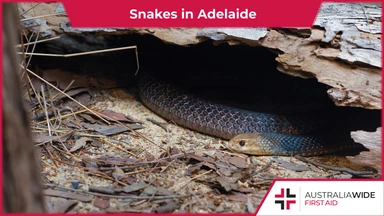
Adelaide comprises a wide range of bushland, rural, and semi-rural environments. As such, it is home to a variety of native wildlife, including venomous snakes. Some of the most commonly encountered snakes in Adelaide are highly dangerous to humans.
January 24, 2023
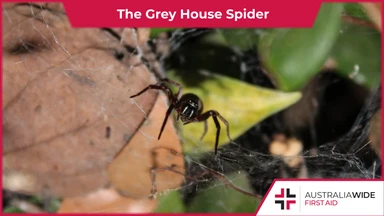
Though Grey house spiders can live in a variety of habitats, they prefer to build their tangled, ladder-like webs in and around houses on the eastern side of Australia. Like most House spiders, their bites can cause moderate to severe local symptoms.
January 17, 2023
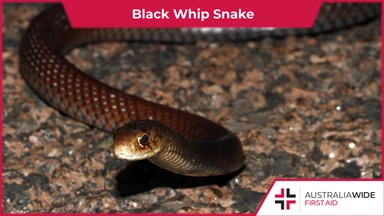
The Black whip snake is common throughout south east Queensland, including Brisbane. Large individuals are considered potentially dangerous, as their venom can cause a host of moderate to severe symptoms.