

Your Guide to Venomous Snakes in Adelaide

Owing to its abundance of national and conservation parks, Adelaide is home to a wide variety of native wildlife, including venomous snakes.
In this article, we look at the characteristics and preferred habitats of 5 of the most commonly encountered venomous snakes in Adelaide.
For the most part, these snakes have highly toxic venom that can affect living cells and cause dangerous symptoms ranging from bleeding and nausea to irregular heart beat and death.
It is important to remember, however, that these snakes will never go out of their way to attack you. In fact, most bites occur when people attempt to approach, capture, or kill snakes.
If you need a snake relocated from your home, contact a snake catcher, instead.
And to learn about identifying and treating snake bites, head to one of our general or childcare first aid courses near you in Adelaide.

They typically shelter in thick vegetation, mammal burrows, and under large rocks.

Tiger snakes are mainly found in and around the Murraylands and the Fleurieu Peninsula, including Kangaroo Island. This includes:
They typically shelter in matted vegetation, disused animal burrows, and under fallen timber.

The Eastern brown snake is the most common snake in South Australia and is regularly encountered in Adelaidean suburbs. They can be found in a wide range of habitats, except for rainforest and alpine regions, and generally shelter in or under:

The Pygmy copperhead can be found in the high altitude forests of the Mount Lofty Ranges, and in a wide variety of habitats on Kangaroo Island, including:
They typically shelter under flat stones, fallen timber, and in matted vegetation.

Though Little whip snakes are venomous and can cause pain, they are virtually harmless to humans.
They have been found under rocks, logs, and partially embedded in the soil.

Head to our Resource Library for information about identifying and treating bites from some of Australia's deadliest snakes.
We also cover snake bites in our general and childcare first aid courses.
We have training locations in every state, capital city, and major town throughout Australia, including Adelaide - head to our website to find and enrol in a first aid course near you today.
January 24, 2023
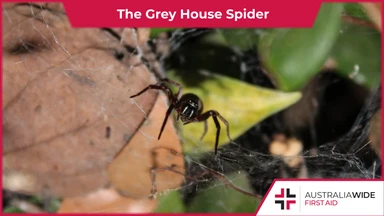
Though Grey house spiders can live in a variety of habitats, they prefer to build their tangled, ladder-like webs in and around houses on the eastern side of Australia. Like most House spiders, their bites can cause moderate to severe local symptoms.
January 17, 2023
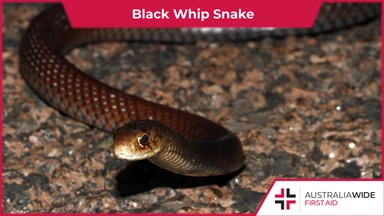
The Black whip snake is common throughout south east Queensland, including Brisbane. Large individuals are considered potentially dangerous, as their venom can cause a host of moderate to severe symptoms.
January 13, 2023
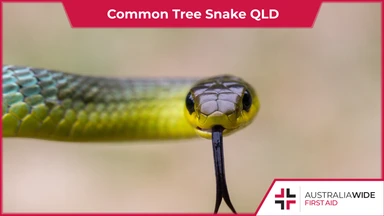
The Common tree snake is one of the most common snakes encountered in Brisbane and wider south east Queensland (QLD). They are regularly encountered in homes and suburban gardens, where they use an interesting defence to deter any potential threats.