

Understanding Psychosocial Hazards in the Workplace: A Beginner's Guide

Psychosocial hazards can significantly impact a person's mental and physical health.
In Australia, it is crucial to understand how to identify and manage these hazards to avoid injury.
Psychosocial hazards refer to any factor in the workplace environment that can cause psychological harm to employees. These hazards can range from job demands and low job control to bullying, harassment, and violence in the workplace. While physical hazards are often easy to identify and address, psychosocial hazards can be more difficult to manage, as they involve employees' mental and emotional well-being.
It is important to understand psychosocial hazards to ensure the safety and well-being of employees in the workplace. Employees exposed to these hazards can experience stress, anxiety, depression, and other mental health issues. This can lead to decreased productivity, absenteeism, and higher turnover rates. In some cases, the impact of psychosocial hazards can be severe, leading to long-term disabilities or even suicide.
Identifying and managing psychosocial hazards in the workplace is important. This involves examining all aspects of the work environment, including job demands, communication and support, leadership and management, and the physical environment.
It is also important to involve employees in the risk assessment process, as they are often the ones most affected by these hazards. There are various ways to identify psychosocial hazards.
Some common methods are:
Psychosocial hazards can cause both psychological and physical injuries. Psychological harm may include anxiety, depression, post-traumatic stress disorder, sleep disorders, and other mental health issues. Physical harm may include musculoskeletal injuries, chronic diseases, or fatigue-related injuries
Here are some of the most common types of injuries that can result from psychosocial hazards.

There are several ways to avoid injury from psychosocial hazards. These include:
Injuries caused by psychosocial hazards can take a toll on one's mental health and well-being, which can be just as severe as physical injuries. Therefore, it is important to have the necessary skills and knowledge to provide immediate assistance to those in need. First aid training is essential to managing injuries caused by psychosocial hazards.
Psychosocial hazards can cause significant harm to an individual's mental and physical health. Identifying these hazards and taking appropriate measures to manage them is important.
This includes promoting work-life balance, providing support, managing workloads, addressing conflicts, improving the workplace environment, and implementing policies and procedures. Additionally, first aid training is crucial for managing injuries caused by psychosocial hazards.
Source : Safeworkaustralia
October 18, 2022
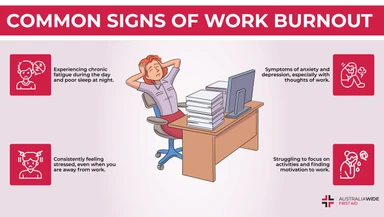
Work burnout is a condition in which a person struggles to manage daily activities due to a prolonged period of excessive workload and mental strain. Without management, work burnout can lead to severe physical and mental complications.
October 4, 2022
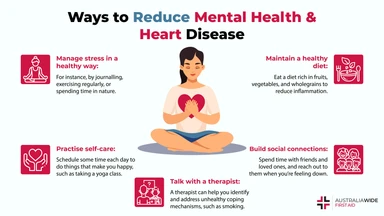
The relationship between mental health and physical health is reciprocal, and it is important to look after both to maintain overall wellbeing. For instance, certain mental health issues can increase the risk factors for heart disease.
October 3, 2022
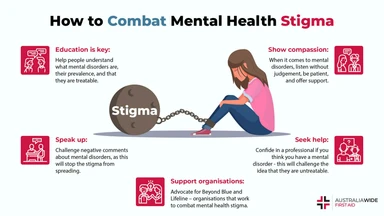
Mental health stigma broadly refers to negative thoughts, beliefs, and actions about people with mental disorders. Mental health stigma exists for several reasons, and it can have several devastating impacts on people with mental disorders and society in general.