

Lightning Radars and Avoiding Lightning Strikes

Lightning radars are used to track electrical activity during severe weather events.
They’re often used to prepare for damage to electrical networks, but they can also be used to reduce your risk of a lightning strike.
In this article, we are going to look at how to identify and manage the symptoms of a lightning strike, as well as how to reduce your risk of a lightning strike.
If you’re interested in getting hands-on experience with managing different emergencies, you can sign up for one of our general or childcare first aid courses near you.
Very simply put, lightning is an electrical discharge that occurs when there is an imbalance of electrons in the clouds or between the clouds and the ground.
When lightning strikes the body, there is a nine in ten chance you’ll survive. Common symptoms of a lightning strike are:
Some of the most common long-term effects of lightning strikes are persistent neurological symptoms, including muscle weakness, sensory loss, spinal cord weakness, and difficulty thinking and concentrating. The severity and length of healing time for these injuries depends on how severe the initial injury was.
If you see somebody get struck by lightning, call 000 immediately. You can also visit our blog post on lightning strikes to learn what First Aid might need to be administered.
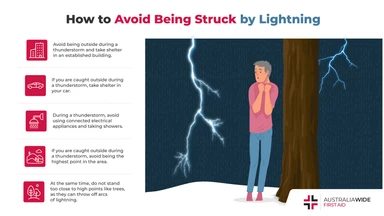
In our article on lightning strikes, you can read about several different ways to reduce your risk of being struck by lightning, such as not going near water sources and removing jewellery and metal from your body.
If you hear a buzzing sound and your hair starts to stand on end, you are in an area that is about to be struck by lightning and you need to leave immediately.
If you’re in an area that is being affected by a storm, you should check a lightning radar to know when to stay inside or move inside immediately.
If you’re in an area that is being affected by a storm, you should be aware of the risk lightning poses. Lightning strikes can be very serious and cause severe injuries.
Check a lightning radar to know whether you should immediately take preventative measures.
If you’re interested in getting hands-on experience with managing different emergencies, such as lightning strikes, you can sign up for one of our general or childcare first aid courses near you.

March 2, 2023
Wilderness first aid is an essential skill for anyone who plans to spend time in the great outdoors. This guide will cover identifying and treating common injuries, staying healthy in the wild, responding to emergencies, and the benefits of taking a wilderness first aid course. Knowing what to do in an emergency can help you stay safe and healthy during your time in the wilderness.

February 7, 2023
A relatively new addition to the forest ecosystems of Adelaide, the Grey-headed flying-fox (also known as the fruit bat), is the largest bat species in Australia. They can transmit several deadly diseases, including the Australian bat lyssavirus (ABLV).
November 8, 2022
Though being struck by lightning might seem far-fetched, over one hundred people in Australia are injured by lightning strikes every year. Injuries can include cardiac arrest, neurological damage, and skin burns. Luckily, there are ways to reduce your risk of being struck by lightning.